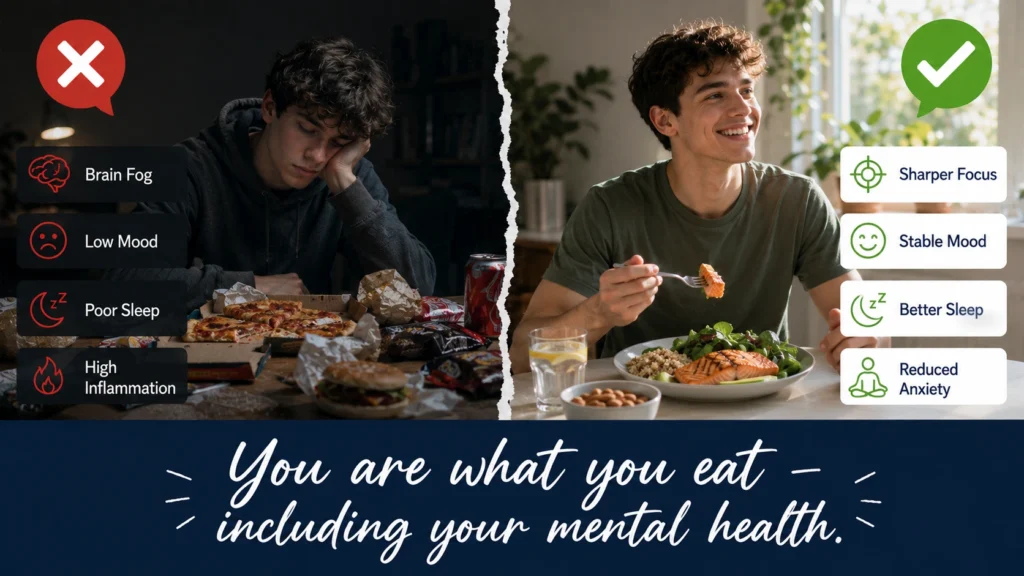
Nutritional psychiatry is one of the most important — and most overlooked — developments in modern mental health care. It’s not a diet trend or a wellness buzzword. It’s an emerging clinical field that examines how the foods you eat directly influence your brain chemistry, your emotional resilience, and your risk for conditions like depression and anxiety.
For decades, mental health treatment focused almost entirely on medication and therapy. Both remain essential tools. But researchers and clinicians are now asking a question that should have been asked much sooner: What is the patient eating? The answer, it turns out, matters more than most people realize.
Your Brain Runs on What You Feed It
The brain is the most metabolically active organ in the human body. It never shuts off — not during sleep, not during rest — and it demands a continuous, reliable supply of nutrients to function properly. When those nutrients are consistently absent or replaced with processed, refined substitutes, the consequences extend well beyond physical health.
Studies have found that diets high in refined sugars and processed foods promote inflammation throughout the body, including the brain. That inflammation doesn’t just affect physical health — it actively worsens the symptoms of mood disorders like depression and anxiety. Put plainly, a low-quality diet is not neutral for mental health. It works against it.
Conversely, high-quality diets rich in vitamins, minerals, antioxidants, and healthy fats protect the brain from oxidative stress and support the production of the neurotransmitters that regulate your mood, focus, and sleep.
The Gut-Brain Axis: Why Your Stomach Talks to Your Mind
One of the most significant discoveries in nutritional psychiatry involves the gut-brain axis — the bidirectional communication system between your gastrointestinal tract and your central nervous system. Understanding this connection fundamentally changes how we think about mental health treatment.
Approximately 95% of the body’s serotonin — the neurotransmitter closely tied to mood stability and emotional regulation — is produced not in the brain, but in the gut. That production is heavily influenced by the trillions of bacteria that make up your gut microbiome. A healthy, diverse microbiome supports serotonin synthesis, reduces systemic inflammation, and strengthens the gut lining against harmful toxins. A disrupted microbiome does the opposite.
This means that what you eat affects your gut bacteria, your gut bacteria affect your neurotransmitter production, and your neurotransmitter levels affect how you feel — emotionally and mentally. Diet, in other words, is not separate from mental health. It’s woven into it.
What the Research Actually Shows
Growing nutritional psychiatry research comparing traditional dietary patterns with Western diets has produced striking findings. People who follow diets in the Mediterranean or traditional Japanese style — high in vegetables, fruits, unprocessed grains, fish, and fermented foods — show a 25 to 35 percent lower risk of developing depression compared to those eating a typical Western diet loaded with processed foods and refined sugars.
Specific nutrient deficiencies have also been linked to the onset and worsening of mental health conditions. Research points to low levels of omega-3 fatty acids, magnesium, zinc, B vitamins (particularly B6, B12, and folate), and vitamin D as contributors to depression, anxiety, and in some cases, cognitive decline.
This is not a coincidence. These nutrients are the raw materials the brain uses to build neurotransmitters, regulate inflammation, and maintain neural connectivity. When they’re consistently depleted, mental health suffers. When they’re restored, patients often report meaningful improvements — not as a replacement for treatment, but alongside it.
If you’ve been working with a provider on managing depression, asking about your nutritional status is a clinically relevant conversation worth having.
Foods That Support Mental Health
The practical takeaway from nutritional psychiatry research isn’t a rigid meal plan — it’s a pattern of eating that consistently supplies the brain with what it needs. Foods associated with better mental health outcomes include:
Omega-3 rich foods: Fatty fish like salmon, sardines, and mackerel; flaxseeds, chia seeds, and walnuts. Omega-3s have documented anti-inflammatory properties and support healthy neurotransmitter function.
Fermented foods: Yogurt, kefir, kimchi, sauerkraut, and miso support a diverse gut microbiome and, through the gut-brain axis, promote better mood regulation.
Leafy greens and colorful vegetables: Rich in folate, magnesium, and antioxidants that protect brain cells from oxidative damage.
Whole grains: Provide steady glucose to the brain and support gut health through dietary fiber that feeds beneficial bacteria.
Dark chocolate (70% cacao or higher): Contains flavonoids with antioxidant and mild mood-supportive properties — in moderate amounts.
Foods That Work Against You
Nutritional psychiatry is equally clear about what to limit. Diets high in ultra-processed foods, refined sugars, and trans fats consistently correlate with worse mental health outcomes. These foods trigger inflammatory responses, destabilize blood sugar, disrupt gut bacteria, and interfere with neurotransmitter production — creating the very conditions that make depression and anxiety harder to manage.
The connection between physical health and anxiety is well-established, and diet sits at the center of both.
How Nutritional Psychiatry Fits Into Psychiatric Treatment
It’s important to be direct about one thing: nutritional psychiatry is not a replacement for psychiatric care. For conditions like clinical depression, bipolar disorder, OCD, ADHD, or severe anxiety disorders, evidence-based treatments — including medication management and psychotherapy — remain the foundation of care.
What nutritional psychiatry offers is a complementary layer. Dietary improvements can make the brain more responsive to treatment, reduce inflammation that worsens symptoms, and support overall psychological resilience. At Bergen Psychiatric Associates, our approach to mental health is comprehensive. When medication or therapy is indicated, we provide it — and we recognize that lifestyle factors like nutrition play a meaningful supportive role in long-term wellness.
If you’re currently navigating a mental health condition and want to understand how all of these factors fit together, our medication management team can help you build a treatment plan that accounts for the full picture.
Frequently Asked Questions About Nutritional Psychiatry
Can changing my diet treat depression on its own?
Diet alone is generally not sufficient to treat clinical depression. It can support your overall mental health and make other treatments more effective, but should not replace professional psychiatric care.
How long does it take to notice a difference when improving your diet?
Many people report changes in energy, mood, and mental clarity within two to four weeks of consistently reducing processed foods and increasing whole, nutrient-dense options — though individual results vary.
Do I need supplements, or can I get what I need from food?
Whole food sources are always preferable. However, in cases of confirmed deficiencies — particularly vitamin D, B12, omega-3s, or magnesium — supplementation under medical guidance may be appropriate.
Ready to Take a Comprehensive Approach to Your Mental Health?
If you’re in the Bergen County area and want psychiatric care that looks at the full picture — not just symptoms in isolation — Bergen Psychiatric Associates is here to help. Dr. Syed Zaidi and our team in Fair Lawn, Hackensack, and Emerson, NJ provide personalized evaluation and treatment for depression, anxiety, and a wide range of mental health conditions.
Call us at 201-342-4004 or book an appointment online to get started.