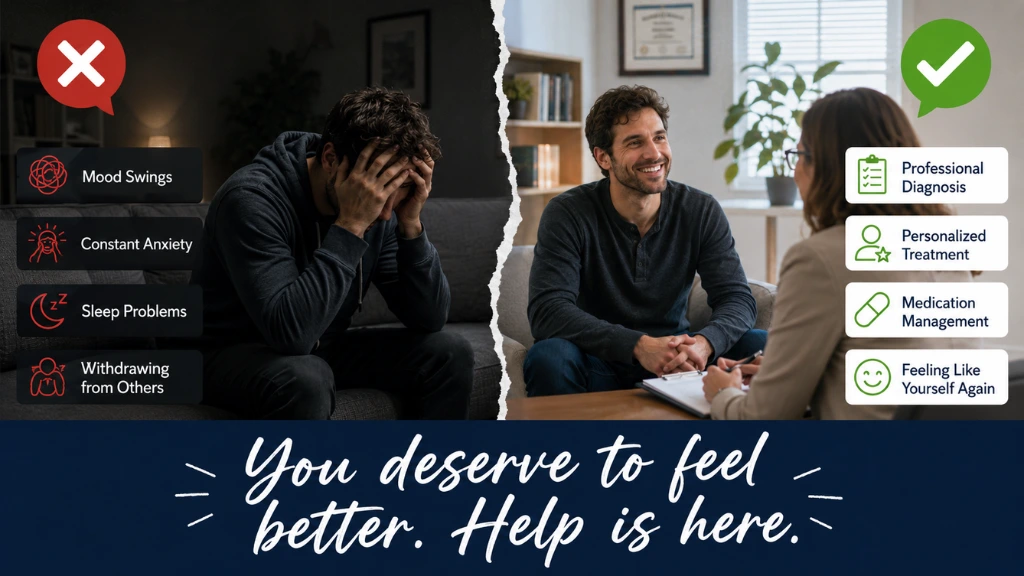
Most people don’t wake up one day and suddenly decide it’s time to see a psychiatrist. It usually happens gradually — a few rough weeks turn into rough months, a temporary coping habit becomes a daily one, and “I’ll deal with it later” slowly turns into “I don’t know how to deal with this anymore.”
At Bergen Psychiatric Associates, Dr. Syed Zaidi, MD and his team hear a similar sentence from many new patients during their first visit: “I probably should have come in sooner.” If you’ve been wondering whether what you’re feeling is “serious enough” to warrant professional help, this guide can help you recognize the signs — and understand exactly what happens next.
Psychiatrist or Therapist? Why the Difference Matters
One of the biggest sources of confusion is whether to see a therapist or a psychiatrist first. The two aren’t interchangeable, and understanding the difference can save you time.
A psychiatrist is a medical doctor who can diagnose mental health conditions, prescribe and manage medication, and evaluate whether physical health issues may be contributing to emotional symptoms. A therapist (psychologist, social worker, or counselor) typically provides talk therapy and coping strategies but cannot prescribe medication.
Many people benefit most from both working together — therapy for ongoing emotional support, paired with a psychiatrist for diagnosis and medication management when it’s needed. If you’re still unsure which path fits you, How to Choose the Right Therapist for Your Mental Health Needs is a good place to start, or you can simply reach out and let Dr. Zaidi’s team help you figure out the right fit.
Signs You Should See a Psychiatrist for Mental Health Treatment
Mental health symptoms rarely show up in just one way — they affect emotions, behavior, thinking, and even the body. Here are some of the most common signs it may be time to schedule a psychiatric evaluation.
Emotional and Mood-Related Signs
- Persistent sadness, emptiness, or hopelessness that lasts for weeks rather than days
- Anxiety or worry so constant it interferes with work, relationships, or everyday decisions
- Dramatic mood swings — cycling between extreme highs and deep lows
- Irritability or anger that feels disproportionate to the situation
- Emotional numbness, or feeling disconnected from things you used to enjoy
Behavioral Changes Worth Paying Attention To
- Withdrawing from friends, family, or activities you once cared about
- Increased use of alcohol, drugs, or other substances to cope with stress
- Noticeable changes in eating patterns or unexplained weight changes
- Struggling to keep up with responsibilities at work, school, or home
- Impulsive or risky behavior that feels out of character
Cognitive Signs
- Difficulty concentrating, remembering things, or making decisions
- Racing thoughts that are hard to slow down
- Intrusive or repetitive thoughts that feel impossible to control
- Fixation on specific routines, fears, or beliefs that disrupt daily life
Physical Signs Often Linked to Mental Health
- Ongoing sleep problems — insomnia or sleeping far more than usual
- Persistent fatigue or low energy with no clear medical cause
- Unexplained headaches, stomach issues, or muscle tension
- Appetite changes that don’t match any physical illness
Many of these physical and emotional symptoms overlap, which is part of why people often struggle to name what they’re feeling. If that sounds familiar, Anxiety vs. Stress: Understanding the Difference for Better Mental Health can help you make sense of it.
When It’s an Emergency, Not Just a Sign
Some symptoms need immediate attention rather than a scheduled appointment:
- Thoughts of suicide or self-harm
- Hearing voices or seeing things others don’t
- Feeling detached from reality or unable to tell what’s real
If you or someone you love is experiencing any of these, please call or text 988 (Suicide & Crisis Lifeline) or go to the nearest emergency room right away. These symptoms are treatable, but they shouldn’t wait for a routine appointment.
What Happens During a Psychiatric Evaluation
Walking into a psychiatrist’s office for the first time can feel intimidating, especially if you don’t know what to expect. At Bergen Psychiatric Associates, the process is built to feel collaborative, not clinical.
During your first visit, Dr. Zaidi will talk with you about your symptoms, medical history, family history, and lifestyle. In some cases, genetic testing may also be recommended to help identify which medications are most likely to work well for your specific body chemistry — an approach that helps avoid the frustrating trial-and-error many patients go through elsewhere.
From there, a personalized plan is developed, which may include medication management, psychotherapy, or a combination of both. You can also complete the new patient intake form ahead of time to make your first visit faster and smoother.
Why Early Treatment Makes Such a Big Difference
Mental health conditions, much like physical ones, tend to respond better to early intervention. Waiting until symptoms become severe usually means a longer, harder road to recovery.
Starting treatment sooner can help you:
- Prevent symptoms from escalating into a crisis
- Learn coping strategies before stress becomes overwhelming
- Reduce the disruption symptoms cause at work, school, or in relationships
- Build a stronger, more trusting relationship with your treatment team over time
This holds true across nearly every condition — whether you’re supporting a loved one through depression or recognizing the early signs of mental illness in yourself. The earlier the conversation starts, the more options you have.
You Don’t Have to Wait for a Crisis to Get Help
There’s a common misconception that psychiatric care is only for severe, life-altering crises. In reality, many people see a psychiatrist simply because something feels off and they want help understanding why.
You don’t need a formal diagnosis to make an appointment. You don’t need to have “tried everything else” first. And you definitely don’t need to wait until things get worse. If you found yourself nodding along to several signs above, that’s reason enough to reach out.
Frequently Asked Questions
Do I need a referral to see a psychiatrist at Bergen Psychiatric Associates?
No referral is typically required. You can call directly or complete the intake form to begin scheduling an appointment.
How is a psychiatrist different from my primary care doctor?
A primary care doctor can prescribe some basic mental health medications, but psychiatrists have specialized training in diagnosing and treating complex psychiatric conditions, adjusting medications over time, and recognizing when symptoms need a different approach.
Can a psychiatrist help even if I don’t want to take medication?
Yes. Treatment doesn’t have to include medication. Many patients work with a psychiatrist primarily for diagnosis, monitoring, and guidance, while therapy carries most of the day-to-day work.
Reach Out Today
With over 30 years of experience, Dr. Syed Zaidi, MD and the team at Bergen Psychiatric Associates and Fair Lawn Behavioral Associates provide compassionate, evidence-based psychiatric care across three convenient New Jersey locations — Fair Lawn, Hackensack, and Emerson. Whether you’re managing anxiety, depression, ADHD, addiction, or simply trying to understand what you’re feeling, support is closer than you think.
Call 201-342-4004 today to schedule an appointment, or contact us to learn more about getting started.