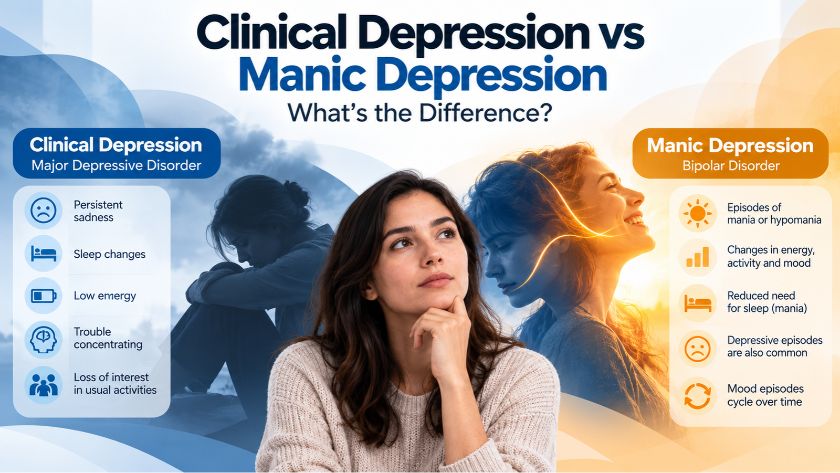
Clinical depression usually refers to major depressive disorder, a condition marked by depressive symptoms that affect mood, thinking, sleep, energy, and daily functioning. “Manic depression” is an older term for bipolar disorder, not a separate modern diagnosis. Both conditions can involve major depressive episodes, which is why they can look similar when someone is depressed.
History of mania or hypomania is the key distinction. Major depressive disorder involves depressive episodes without a manic or hypomanic history that would instead support a bipolar-spectrum diagnosis. Since bipolar depression can closely resemble major depression, a careful psychiatric assessment matters.
What Is Clinical Depression?
Clinical depression is a common name for major depressive disorder, also called major depression. It’s different from feeling sad for a few days after a disappointment or stressful event because the symptoms are more persistent and can interfere with work, school, relationships, sleep, eating, and other parts of daily life.
For a major depressive episode, symptoms generally last at least two weeks. During that time, a person has depressed mood and/or a marked loss of interest or pleasure, along with other symptoms that may include:
- Persistent sadness, emptiness, or hopelessness
- Loss of interest or pleasure in usual activities
- Sleep changes, including sleeping too little or too much
- Changes in appetite or weight
- Low energy or fatigue
- Trouble concentrating or making decisions
- Feelings of worthlessness or excessive guilt
- Noticeable restlessness or slowed movement
- Thoughts of death or suicide
People can have different combinations of symptoms, so one list can’t tell you whether you have major depressive disorder. Clinicians also consider symptom frequency, severity, functional impact, medical history, medications, and substance use.
What Does “Manic Depression” Mean?
Manic depression is an older name for bipolar disorder. You may still see the phrase in older medical writing, family conversations, or online searches, but current psychiatric terminology uses bipolar disorder.
Episodes in bipolar disorder involve abnormal changes in mood, energy, activity, and functioning. Depressive episodes are common, and episodes of mania or hypomania define the bipolar pattern.
Ordinary changes between feeling happy and sad aren’t enough for a bipolar diagnosis. Mood episodes involve a clear shift from a person’s usual state and can affect sleep, speech, thinking speed, judgment, behavior, activity, and the ability to function.
Bipolar I and Bipolar II Aren’t the Same
Bipolar I disorder is defined by at least one manic episode. Major depressive episodes often occur in Bipolar I, but one isn’t required for that diagnosis.
For Bipolar II disorder, a person must have at least one major depressive episode and at least one hypomanic episode, with no history of a full manic episode. Hypomania is less severe than mania, but it still represents a meaningful change in mood, energy, and behavior.
Clinical Depression vs Manic Depression: What Is the Main Difference?
Your mood history provides the main distinction, especially whether manic or hypomanic episodes have occurred. In a depressive episode, bipolar disorder can look very similar to major depressive disorder.
|
Feature |
Clinical Depression / Major Depressive Disorder |
Bipolar Disorder / Older Term “Manic Depression” |
| Core pattern | Major depressive episode(s) without a history of mania or hypomania that supports a bipolar diagnosis. | Mood episodes include mania or hypomania. Depressive episodes are also common. |
| Depressive episodes | A core part of major depressive disorder. | Common. Required for Bipolar II, but a major depressive episode is not required for Bipolar I. |
| Mania | A full manic episode is not part of major depressive disorder. | At least one manic episode defines Bipolar I disorder. |
| Hypomania | A full hypomanic episode is not part of major depressive disorder. | Bipolar II requires at least one hypomanic episode and at least one major depressive episode, with no full manic episode. |
| Sleep and energy | Fatigue and insomnia or oversleeping can occur during depression. | Depression may look similar. Mania or hypomania can include increased energy and a reduced need for sleep. |
| Mood pattern | Depressive episodes may recur, but there is no manic or hypomanic history supporting a bipolar diagnosis. | Episodes may involve mania, hypomania, depression, or mixed features, with more stable periods between episodes. |
| Diagnosis | Focuses on depressive symptoms, duration, impairment, history, and ruling out other causes. | Requires a lifetime mood history, especially evidence of mania or hypomania and changes in functioning. |
| Treatment planning | May include psychotherapy, antidepressant medication, or other treatments based on the individual. | May include mood-stabilizing medication, certain atypical antipsychotics, psychotherapy, or other treatments. Antidepressant monotherapy may be inappropriate for some people. |
What Does a Depressive Episode Look Like?
Low mood, loss of interest, fatigue, sleep or appetite changes, concentration problems, guilt or worthlessness, slowed or restless behavior, and thoughts of death or suicide can occur in a major depressive episode. These symptoms may appear in major depressive disorder and during the depressive phase of bipolar disorder.
That overlap is one reason a snapshot of someone’s current symptoms may not tell the whole story. When someone seeks care during depression, they may not think to mention an earlier period of unusually high energy, very little need for sleep, faster speech, or impulsive behavior, especially if that period felt productive rather than problematic.
No single depressive symptom proves that someone has bipolar disorder. A broader history of mood episodes and changes in functioning over time is usually needed.
What Are Mania and Hypomania?
Mania
Mania is more than feeling energetic or unusually happy. During a manic episode, a person has a distinct period of elevated, expansive, or unusually irritable mood along with increased energy or activity, and the change is severe enough to cause marked problems with functioning, require hospitalization, or involve psychotic symptoms in some cases.
Possible signs include a reduced need for sleep, rapid or pressured speech, racing thoughts, distractibility, increased goal-directed activity, inflated self-confidence or grandiosity, and impulsive decisions with serious consequences. Some people may spend large amounts of money, drive recklessly, take unusual risks, or start many projects without recognizing how far their behavior has shifted from normal.
Hypomania
Hypomania involves many of the same kinds of mood, energy, sleep, speech, thinking, and activity changes, but it’s less severe than mania. Under current diagnostic criteria, a hypomanic episode lasts at least four consecutive days and doesn’t cause the marked functional impairment, hospitalization, or psychosis associated with mania.
Less severe doesn’t mean harmless. Changes in judgment, relationships, spending, work, and decision-making can still matter, and a history of hypomania helps distinguish Bipolar II disorder from major depressive disorder.
Why Can Bipolar Disorder Be Mistaken for Depression?
Someone with bipolar disorder may first seek care when they’re depressed. Because hypomania can feel like a period of higher productivity, confidence, or energy, the person may not recognize it as something worth reporting.
Past mood changes can also be hard to reconstruct after months or years. People close to the person may remember changes in sleep, speech, activity, spending, irritability, or risk-taking that the person didn’t view as unusual at the time.
New information can lead a clinician to reassess an earlier depression diagnosis. Earlier depressive symptoms can still have been real; the longer mood history may simply point to a different diagnostic framework.
How Do Psychiatrists Tell Depression and Bipolar Disorder Apart?
There isn’t a single blood test, brain scan, or biomarker that can reliably make this distinction in routine clinical care. Medical testing may still be used when a clinician needs to rule out other causes of mood symptoms.
Psychiatric evaluation often includes questions about:
- How long depressive symptoms have lasted and how they affect daily life
- Previous periods of unusually elevated or irritable mood
- Changes in energy, activity, and need for sleep
- Faster speech, racing thoughts, or unusual distractibility
- Impulsive or risky behavior
- Past depressive episodes and their pattern over time
- Family history of depression, bipolar disorder, or other psychiatric conditions
- Responses to past medications
- Alcohol, recreational drugs, and other substance use
- Prescription medications and medical conditions that could affect mood
- Changes noticed by a spouse, relative, friend, or other close person
No single answer confirms bipolar disorder. Clinicians weigh the pattern, severity, duration, timing, and functional effects of symptoms, which is why an online comparison can’t replace a clinical evaluation.
Why Does the Correct Diagnosis Matter for Treatment?
Treatment planning for major depressive disorder and bipolar disorder isn’t interchangeable. Care for major depression may include psychotherapy, antidepressant medication, a combination of the two, or other interventions when first-line treatments haven’t helped enough.
For bipolar disorder, treatment may involve mood-stabilizing medications, certain atypical antipsychotics, psychotherapy, or other approaches based on the current episode, type of bipolar disorder, previous response, medical history, and safety considerations. Treatment of bipolar depression also needs to account for the person’s history of mania or hypomania.
Medication decisions can change when that history is present. NIMH notes that antidepressants aren’t used alone for bipolar disorder because they can trigger mania or rapid cycling in some people, though a prescriber may use an antidepressant alongside other medication in selected cases.
Don’t start, stop, or change a psychiatric medication based on symptoms you read about online. Your prescriber can review your diagnosis, current symptoms, previous responses, other medications, and medical history before discussing treatment options.
When Should You Talk to a Psychiatrist?
Consider speaking with a mental health professional if depression has lasted two weeks or longer, keeps returning, or is disrupting your work, school, relationships, sleep, or daily responsibilities. An evaluation may also be useful if you’ve had periods of unusually high or irritable mood, needed much less sleep without feeling tired, become much more active or talkative than usual, or made risky decisions during periods of high energy.
None of these signs automatically means you have bipolar disorder. Share them with a clinician if you’re unsure about a previous depression diagnosis or have had unexpected changes after starting psychiatric medication.
If you or someone you know is having suicidal thoughts or is in immediate danger, call or text 988 for the Suicide & Crisis Lifeline. Call 911 in a life-threatening emergency.
Psychiatric Care at Bergen Psychiatric Associates
Bergen Psychiatric Associates provides psychiatric evaluation, depression treatment, and medication management for a range of mental health conditions. Dr. Syed Zaidi, MD, is board certified in psychiatry and serves as Medical Director of Bergen Psychiatric Associates and Fair Lawn Behavioral Associates.
Practice locations listed on the website include Hackensack, Emerson, and Fair Lawn, New Jersey. To ask about an appointment for recurring depression, possible manic or hypomanic symptoms, or questions about a previous diagnosis, call 201-342-4004.
Frequently Asked Questions
Is manic depression the same as bipolar disorder?
Yes. “Manic depression” and “manic-depressive illness” are older terms for what clinicians now generally call bipolar disorder. Older references and searches still use the phrase, but it shouldn’t be treated as a separate diagnosis.
Is clinical depression the same as major depressive disorder?
Clinical depression commonly refers to major depressive disorder, also called major depression. Diagnosis requires more than temporary sadness, and clinicians consider the symptoms, duration, severity, effect on functioning, and possible medical or substance-related causes.
Can someone with bipolar disorder experience depression without obvious mania?
Yes. Someone may seek help during a depressive episode, and previous hypomanic symptoms can be subtle or may not have seemed problematic at the time. With Bipolar II disorder, major depressive episodes occur with hypomania rather than full mania, so a detailed lifetime mood history can be especially useful.
What is the difference between mania and hypomania?
Both involve a clear increase in mood, energy, and activity compared with a person’s usual state. Mania is more severe and causes marked functional impairment, may require hospitalization, or may involve psychosis. Hypomania is less severe and doesn’t cause that level of impairment, but it remains clinically meaningful.
Can depression later be diagnosed as bipolar disorder?
Later information may lead a clinician to revise a diagnosis if a manic or hypomanic episode has occurred. This can happen when someone first sought care during depression and earlier periods of increased energy, reduced need for sleep, or unusual behavior weren’t recognized or reported.
Can you have both major depressive disorder and bipolar disorder?
They aren’t usually diagnosed as two separate primary mood disorders once a history of mania or hypomania supports a bipolar diagnosis. People with bipolar disorder can have a major depressive episode, but that depression is understood within the bipolar diagnosis rather than as a separate major depressive disorder.
How does a psychiatrist diagnose bipolar disorder versus depression?
Psychiatrists review current symptoms and the person’s history over time, including previous mood episodes, sleep and energy changes, functioning, family psychiatric history, medications, substance use, and medical conditions. There isn’t one routine laboratory test or brain scan that confirms either diagnosis by itself.